
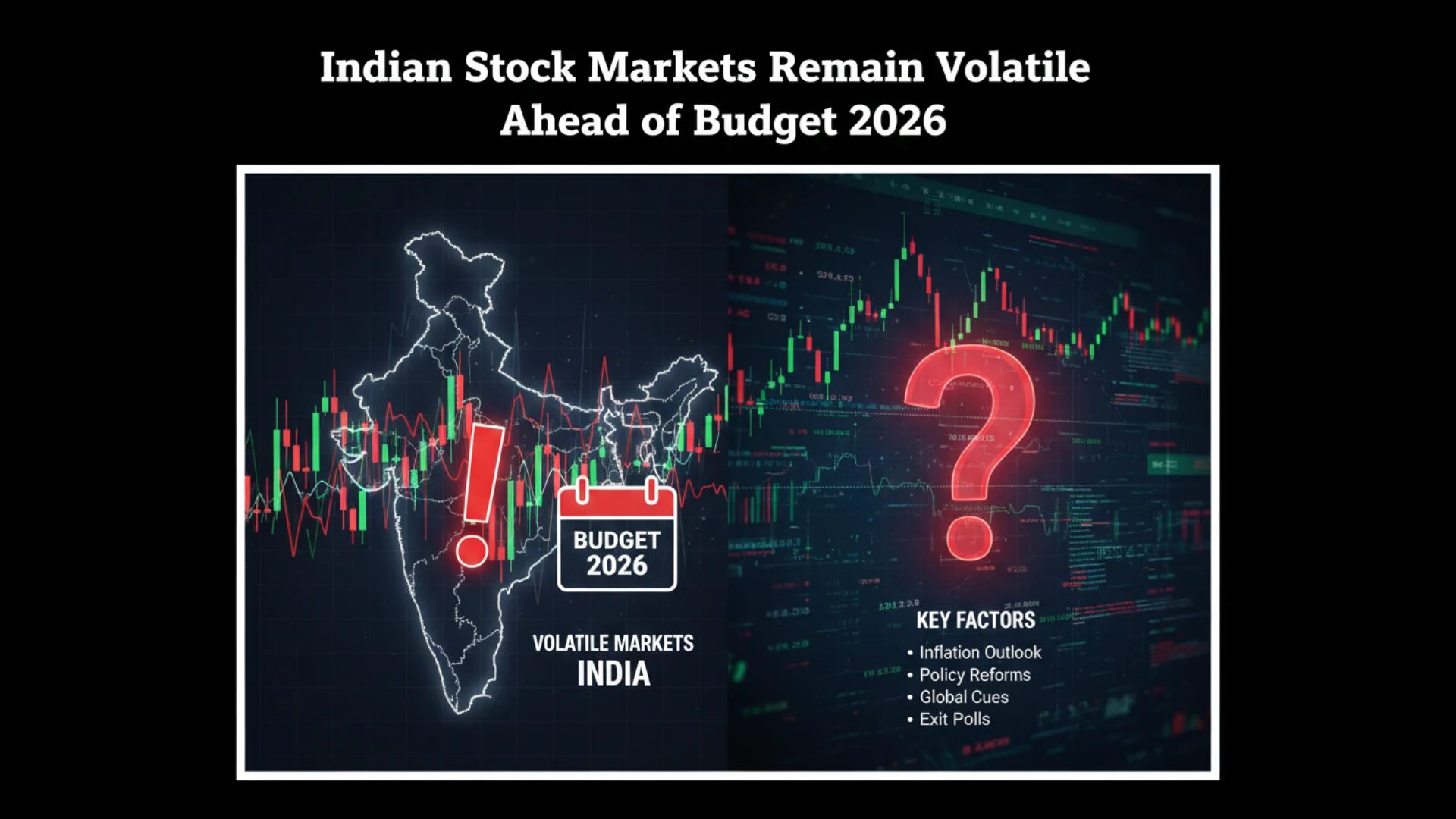
Policy uncertainty, FII/DII flows, profit-booking and global weakness combine to make this pre-budget season unusually choppy.
Overview
Pre-budget volatility is normal — markets price in potential policy changes — but 2026 has seen especially severe swings because multiple forces are converging. Investors are reacting to tax rumors, fiscal deficit expectations, sector-targeted incentives, global macro noise, and shifting flows between foreign and domestic institutions.
1. Policy Uncertainty — The Core Trigger
Markets are trying to anticipate government moves on:
- Capital gains and income tax changes
- Corporate tax adjustments
- Infrastructure spending and capex roadmap
- Fiscal deficit targets and borrowing plans
- Support for manufacturing, EVs, and startups
Even small surprises on these fronts can move sector bets — banks, IT, FMCG, power, manufacturing and real estate are especially sensitive.
2. The FII vs DII Tug-of-War
Foreign institutional investors (FIIs) are cautious because of high US rates, mixed global growth and geopolitical risks. At the same time, domestic institutional investors (DIIs) have been buying dips — which keeps the market range-bound rather than crashing. The resulting seesaw creates choppy intraday and short-term moves.
3. Profit-Booking After a Strong Rally
After multiple lifetime highs over the last 12 months, traders are taking profits ahead of the budget — especially in higher-risk segments:
- Mid-cap stocks
- Small-cap stocks
- High-beta names
4. Global Market Weakness Adds Pressure
US, European and Asian markets have faced headwinds from tight monetary policy, weak IT earnings and renewed inflation worries. This external weakness filters into Indian markets via sentiment and cross-border flows.
What Markets Expect from Budget 2026
Investors are watching for specific announcements that could act as catalysts:
1. Tax-related Moves
Speculation includes higher exemption thresholds, a revised capital gains framework or incentives for retail investors. Positive surprises here could lift sentiment broadly.
2. Large Infrastructure Push
An emphasis on capex for highways, rail, renewable energy, defence manufacturing and smart cities would favour capital goods, engineering, ports and related sectors.
3. Support for Startups & Make-in-India
Potential measures: tax breaks for startups, R&D incentives, semiconductor and AI support. Tech, manufacturing and industrials could respond positively.
Sectoral Outlook
Finance & Banking
Banks may see volatility related to fiscal and borrowing plans, credit demand outlook and NPA trends — but the long-term story remains constructive if growth holds.
Technology & IT
IT firms face currency and global demand uncertainty — a budget-driven tax or incentive could be a welcome tailwind for the sector.
FMCG
FMCG movement will depend on food inflation and rural demand recovery; discretionary consumption may respond to measures that boost disposable incomes.
Real Estate
Housing and property stocks are sensitive to interest-rate outlook and any housing-related tax incentives; expect notable moves during the budget window.
Practical Advice for Traders & Investors
- Don’t over-leverage — volatility spikes can quickly trigger margin calls.
- Use stop-losses and predefined position sizes to manage risk.
- Keep a watchlist of high-conviction names and predefine entry/exit rules.
- Avoid concentration in one sector; ensure portfolio diversification.
- Be ready to deploy cash post-budget — often the best opportunities appear after clarity.