
Why the RBI Is Holding Rates — Implications & Timing (Oct 2025)
Inflation eased sharply but the RBI kept the repo rate at 5.50%. Here’s why, what it means and how to prepare.
Overview — The Policy Puzzle
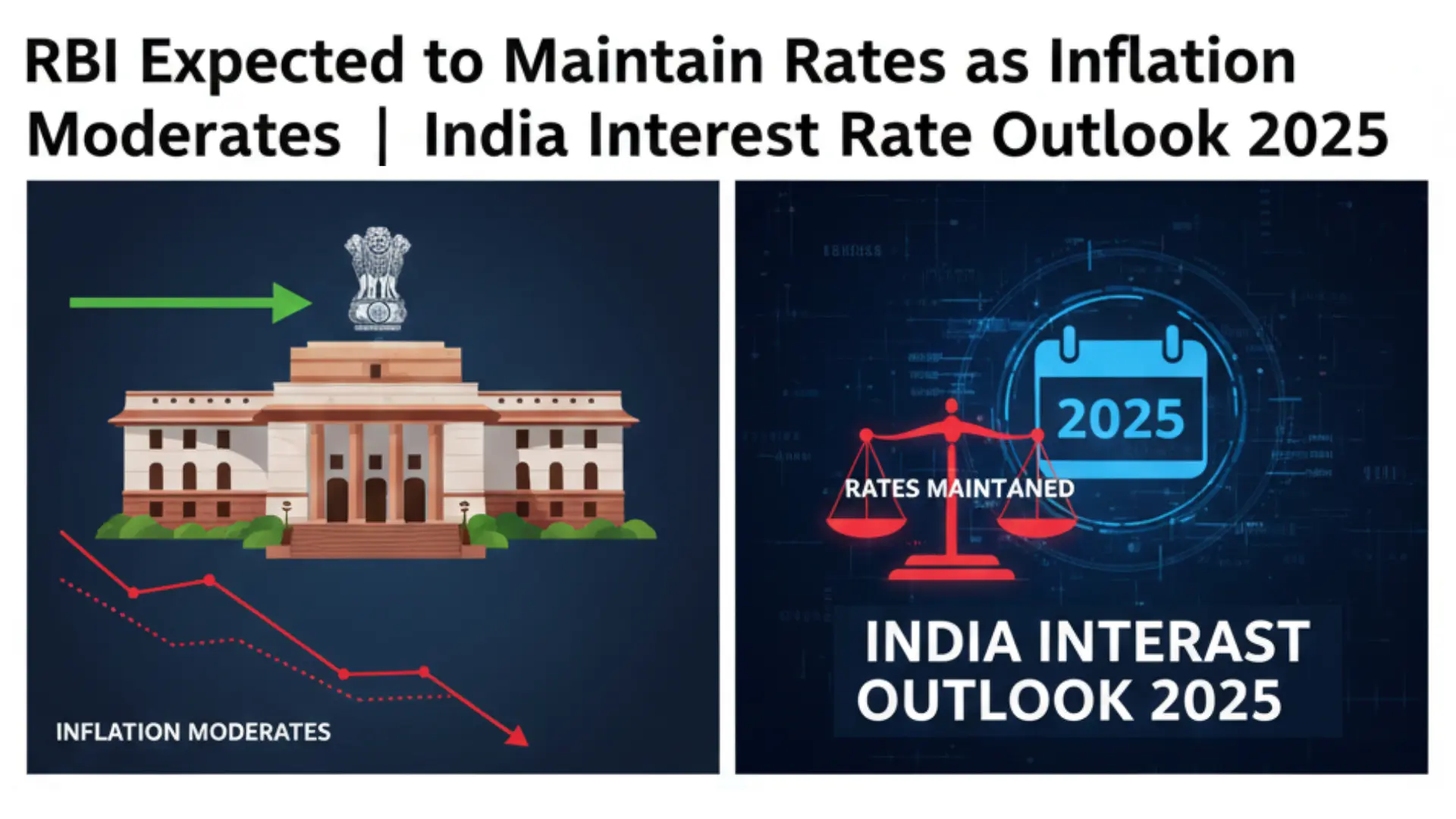
In its October 2025 review the Reserve Bank of India (RBI) left the policy rate unchanged at 5.50%, despite a sharp moderation in inflation. Headline retail inflation dropped dramatically — for example CPI fell to just 0.25% in October 2025 (driven by food disinflation and base effects) and the RBI trimmed its FY26 inflation projection to 2.6%. Yet the Monetary Policy Committee chose to pause on easing. Why?
1. The Inflation Picture — Why Moderation Matters
The fall in inflation gives the RBI more policy space: lower inflation reduces the risk that cuts will stoke price pressures. The MPC can afford to contemplate easing later without jeopardising its primary mandate of price stability. But moderation alone did not trigger cuts in Oct 2025 — other considerations mattered.
2. Why the RBI Stayed Put
- Strong domestic growth: India’s economy remains buoyant — the RBI is wary of cutting too early and risk overheating demand.
- Global uncertainties: External risks (commodity shocks, trade tensions or slower global growth) argue for a buffer of higher rates.
- Transmission & currency stability: The RBI wants to ensure prior rate moves are transmitted through the system and that the rupee remains stable before easing further.
3. What This Means for Borrowers, Savers & Investors
Borrowers
With the repo rate unchanged, lending rates (home loans, business loans, credit cards) are likely to remain stable near current levels. Borrowers will benefit from eventual cuts but those benefits may arrive gradually.
Savers
Deposit rates, fixed-deposit yields and short-term income instruments stay relatively attractive for now. If cuts materialise later, savers could see returns fall — locking some longer-term deposits now may be sensible for those seeking yield.
Investors
- Equities: Rate stability can be supportive for sectors sensitive to demand (consumer, autos, housing). A gradual easing cycle later could be positive for cyclical recovery.
- Debt markets: Lower inflation and stable policy increase the odds of lower bond yields over time, offering capital gains to bondholders.
- Foreign flows: Predictable policy plus low inflation improves India’s macro story and may attract FII interest, subject to global conditions.
- CPI & food inflation monthly prints
- RBI policy minutes and Governor commentary
- Rupee movements and foreign portfolio flows
4. When Could the RBI Cut Rates?
Market participants and analysts view December 2025 or early 2026 as a possible window for initial cuts — but timing is conditional. A 25 bps move in December is being debated in some circles, but the RBI’s decision will hinge on:
- Whether inflation stays low (esp. food & fuel).
- Global monetary conditions (US Fed stance, global liquidity).
- Domestic growth momentum — a slowdown could hasten cuts; strong growth may delay them.
- Exchange-rate stability — sharp rupee weakness could force the RBI to pause easing.
5. Sectoral Impacts — Who Gains When Cuts Come?
- Banks & Financials: Rate cuts can boost credit demand, though margins depend on how fast deposit rates fall.
- Consumer, Auto & Real Estate: Rate-sensitive demand usually improves post-cuts.
- Fixed Income: Bond investors can benefit from capital gains if yields decline.
- Equities broadly: A gradual easing cycle tends to be supportive for equities, especially cyclical sectors with high leverage.
6. Risks That Could Delay Cuts
- Food-price spikes or an unexpected rise in core inflation.
- Global shocks — commodity disruptions, trade crises or aggressive Fed tightening.
- Rupee depreciation putting pressure on imported inflation and FX stability.
- Domestic financial stress (e.g., rising NPAs) that requires cautious RBI stance.
7. Practical Advice — How to Prepare
- For borrowers: If you expect cuts soon but need a loan, balance timing with personal affordability — don’t delay essential borrowing indefinitely.
- For savers: Consider locking attractive deposit rates for a portion of your savings, while keeping some liquidity in short-duration instruments.
- For investors: Watch CPI/food inflation and RBI commentary. Position gradually into rate-sensitive sectors (housing, consumer, autos) and consider duration exposure in debt portfolios.
- Stay informed: Follow RBI releases and macro prints — policy surprises are usually communicated clearly in MPC minutes and Governor speeches.
Conclusion
The RBI’s October 2025 pause reflects a cautious, data-dependent framework: inflation has moderated significantly, giving the central bank room to ease later, but strong growth, global uncertainty and transmission/currency concerns counsel patience. A measured rate-cut cycle remains possible in the coming months, but the timing will be driven by unfolding domestic and external data. For households and investors, a pragmatic approach — balancing liquidity, locking selective yields, and gradually rotating portfolios into rate-sensitive opportunities — is the most sensible path forward.